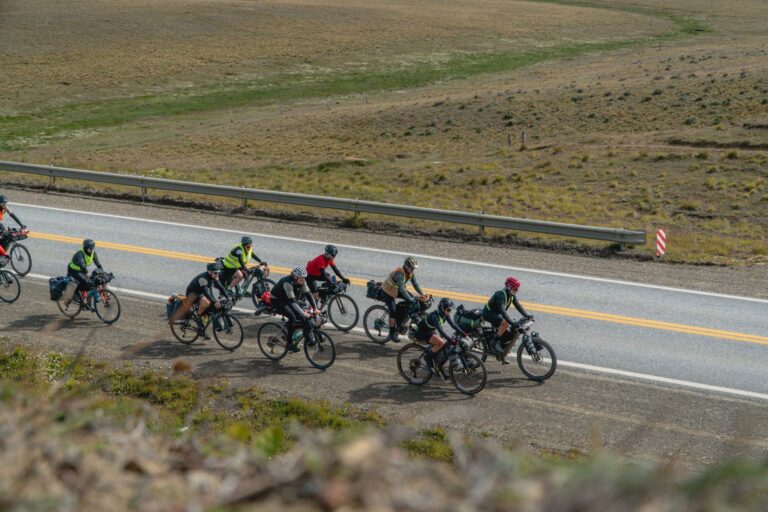

Guide · updated November 2026
Cycling in Japan: a practical guide
Seasons, road rules, trains, where to sleep and the routes we ride, from the guides who take small groups from Kyoto to Tokyo every year.
Japan is one of the best countries in the world to cycle: quiet mountain roads, villages with a shop every few kilometres, hot springs at the end of the day and very safe roads. Go in spring (April and May) or autumn (October and November), ride on the left, and know the new 2026 cycling fines before you go.
Is Japan good for cycling?
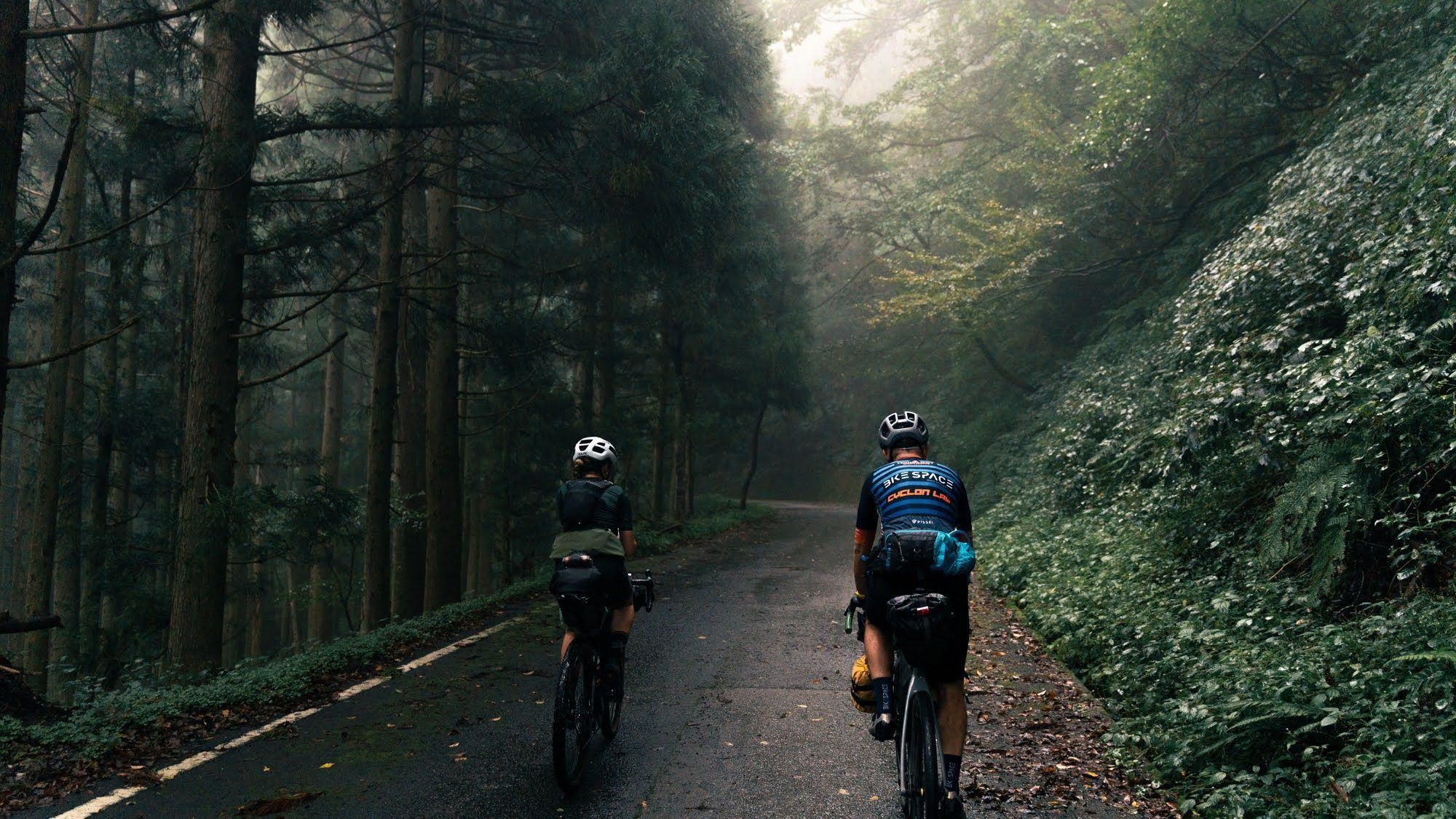
Yes, especially once you leave the big cities. Away from the coastal plains, Japan is a country of forested mountains crossed by small, well-paved roads with little traffic. Old routes such as the Nakasendo, the road through the central mountains in the Edo period, still link villages and post towns, and in the mountains of Gifu and Nagano you can ride for hours between rice paddies, rivers and forests.
Drivers are generally patient, roads are well maintained and convenience stores (konbini) make resupply easy in any town. The challenge is the terrain: once you are in the mountains, Japan is steep, and the passes come one after another.
When is the best time to cycle in Japan?
- Spring (April and May): mild temperatures and long days. In May the leaves are fresh green, the rice paddies are flooded and there can still be snow on the passes above a thousand metres. We ride Rewild Your Mind in May.
- Early summer (June to mid-July): the rainy season on most of the main island, then heat and humidity.
- Late summer (August and September): hot and humid, and the peak of the typhoon season. Hokkaido, in the far north, is cooler and the usual choice for summer riding.
- Autumn (October and November): stable weather and autumn colours in the mountains. Our Kyoto to Tokyo trip runs in October.
- Winter: snow closes many mountain roads; only the south and the coasts are rideable.
Cycling rules in Japan (2026)
In Japan a bicycle is a vehicle. Ride on the left side of the road, use the sidewalk only where signs allow it, stop at red lights and at railway crossings, and never ride after drinking.
Since 1 April 2026 the police can issue “blue tickets”, on-the-spot fines for cyclists aged 16 and over, for more than 100 types of violation. The fines reach ¥12,000 for using a smartphone while riding; running a red light costs ¥6,000 and entering a railway crossing with the barriers down ¥7,000. Riding with earphones can also be fined. Cycling under the influence of alcohol is a criminal offence.
Helmets are an “effort obligation” for all cyclists: the law asks you to wear one, but there is no fine for not doing so. Wear one anyway.
Sources: Nippon.com, figures from the National Police Agency. Check the current rules before you travel.
Can I take my bike on the train?
Yes, if it is packed. On Japanese trains, including the shinkansen, a bike must travel in a bike bag (rinko bag), usually with the wheels removed. Ask before you board if you are unsure, and avoid rush hour in the big cities.
To move a bike box or bag across the country, Japanese luggage forwarding services are excellent. On our Kyoto to Tokyo trip we ship your bike case from Kyoto to the final hotel in Tokyo, so it is waiting for you at the end.
Where do you sleep on a cycling trip in Japan?
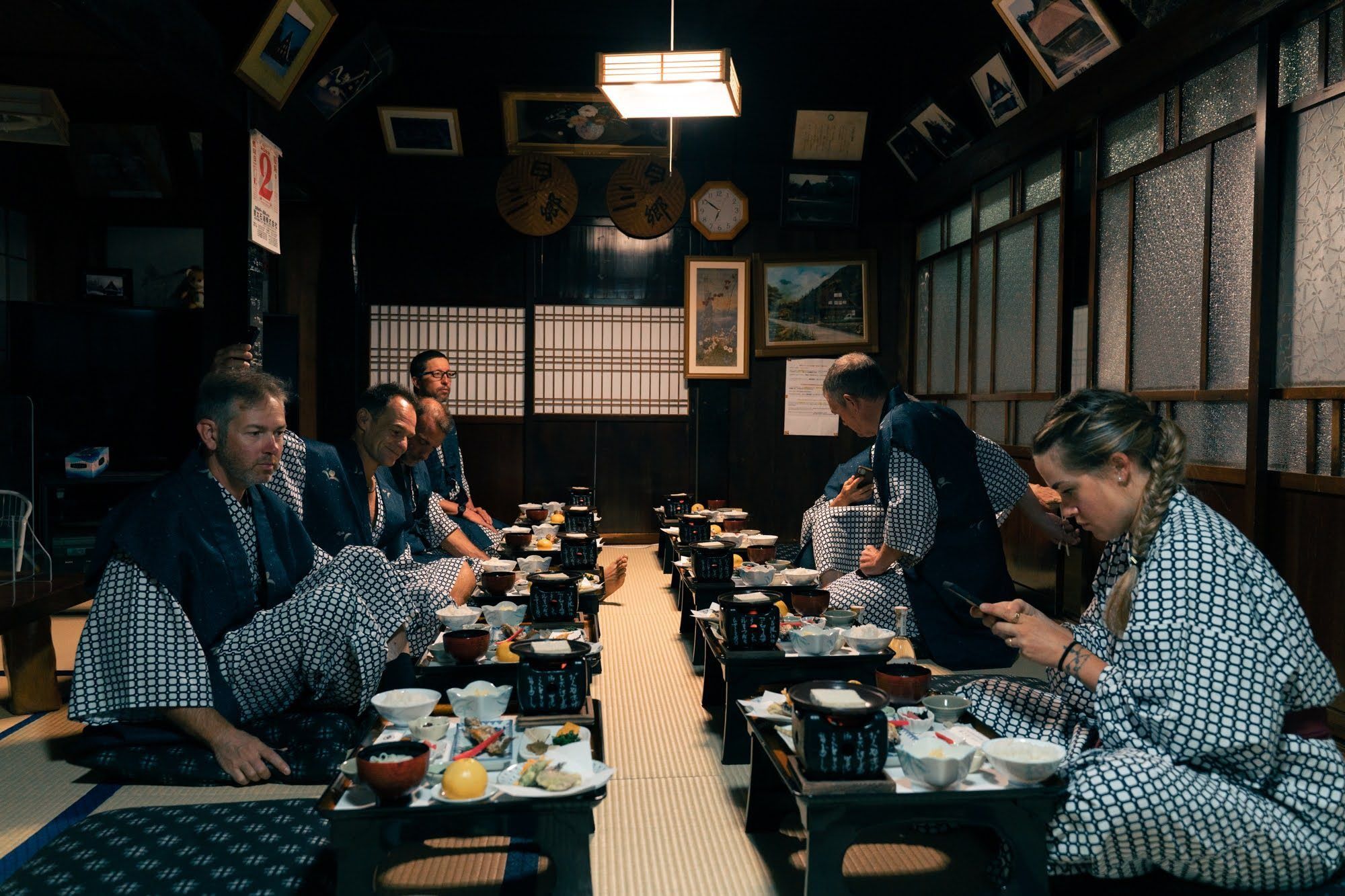
In towns, business hotels are simple, clean and reasonably priced. In the countryside the best nights are in ryokan and minshuku, traditional inns with tatami rooms, a hot bath and a long Japanese dinner. In traditional inns rooms are often shared, and the bath has its own etiquette: you wash before you get in.
Food, water and money
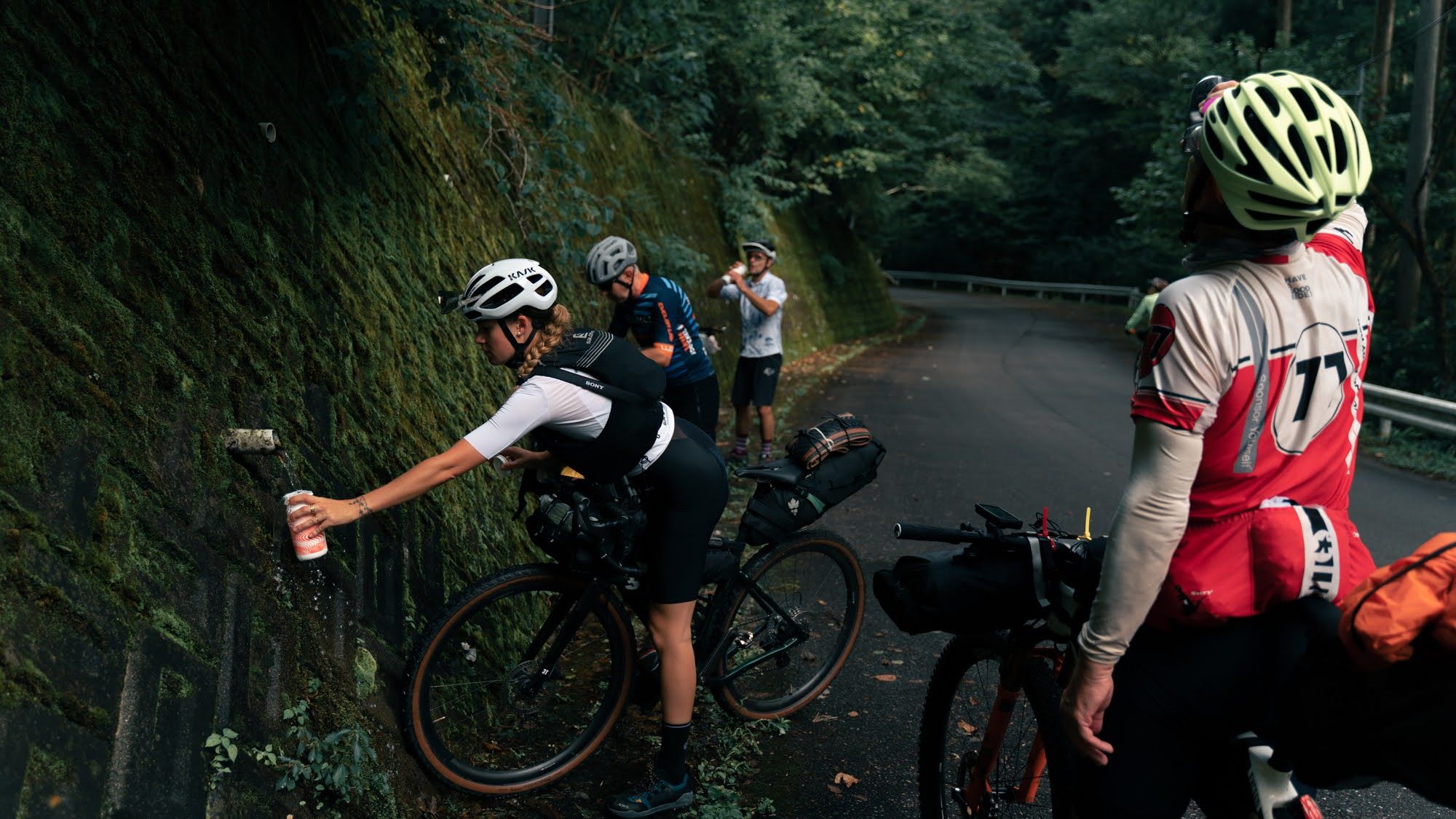
Konbini sell everything a cyclist needs, from rice balls to cold drinks, and you find them in every town. In the mountains the gaps get longer, so carry food and water for the climbs; springs and drinking fountains along old roads are common. Cards are widely accepted in cities, but carry some cash for small inns, shops and shrines in rural areas.
The route we ride: Kyoto to Tokyo
Ten stages and about 876 to 912 km, from the ancient capital to the modern one. We leave Kyoto along Lake Biwa, join the Nakasendo at Sekigahara, ride through Gujo Hachiman and the thatched village of Shirakawago, rest in Takayama, then cross the Kiso valley and Gonbei Pass before the Five Lakes and Mount Fuji. The last stage follows the river to Kawasaki, on the edge of Tokyo.
It is rated hard, with around 10,870 m of climbing, but you ride light: a support van carries your luggage and you sleep in a bed every night.
Ride Japan with us
Two departures a year on the same route: Kyoto to Tokyo in October, and Rewild Your Mind in May, a smaller group with neuroscientist Andrea Bariselli.
Guided or on your own?
Japan is easy to ride independently if you plan well and read some Japanese signs. A guided trip makes sense when you want the best roads without spending weeks on research, someone to handle inns, luggage and bike shipping, and a group to share the long climbs and dinners with.
Questions about cycling in Japan
Is cycling in Japan safe?
Generally yes: roads are well maintained and drivers patient. The risks are the usual ones, plus narrow mountain tunnels, so use lights and avoid busy national roads where you can.
Do I need a helmet in Japan?
The law asks every cyclist to make an effort to wear one, but there is no fine. We strongly recommend it.
Is bikepacking in Japan possible?
Yes. Campsites and roadside stations (michi-no-eki) are common, and Hokkaido is popular for summer bikepacking. We do not run a Hokkaido trip at the moment; our Japan trips are van-supported with nights in hotels and inns.
How fit do I need to be?
For our Kyoto to Tokyo route, you should be used to long days in the saddle and steady climbs: ten stages with mountain passes up to almost 1,300 m.
More questions? Read our general FAQ, write to info@pa-cycling.cc or message us on WhatsApp.