
Guide · updated November 2026
Bikepacking in Patagonia: a practical guide
The routes, the season, the wind, the border crossings and the gear, from the guides who have led riders from El Calafate to Ushuaia for 25 editions.
Patagonia is one of the great bikepacking destinations: gravel roads, glaciers, the Andes and the end of the world in Ushuaia. Ride it in the southern summer, from November to March. Expect strong wind, long distances between shops and quick changes of weather, and plan your food and border crossings carefully.
The classic bikepacking routes in Patagonia
- El Calafate to Ushuaia: from the Perito Moreno Glacier through Torres del Paine, across the Strait of Magellan and through Tierra del Fuego to the southernmost city on Earth. This is the route we ride: about 1,000 km in twelve stages.
- The Carretera Austral: Chile’s Route 7, about 1,200 km through fjords, forests and glaciers from Puerto Montt south to Villa O’Higgins. Much of the southern half is gravel. From Villa O’Higgins, riders continue to El Chaltén in Argentina with boats across the lakes and a trail where you push the bike for long stretches. Check the boat schedules before you go.
- Ruta 40: Argentina’s long road along the Andes. In southern Patagonia it links El Chaltén, El Calafate and the border towards Torres del Paine, with long, exposed stretches across the pampas.
- Tierra del Fuego: the island at the end of the continent, with tracks along the sea, lakes, forests and the Garibaldi Pass before Ushuaia.
When is the best time for bikepacking in Patagonia?
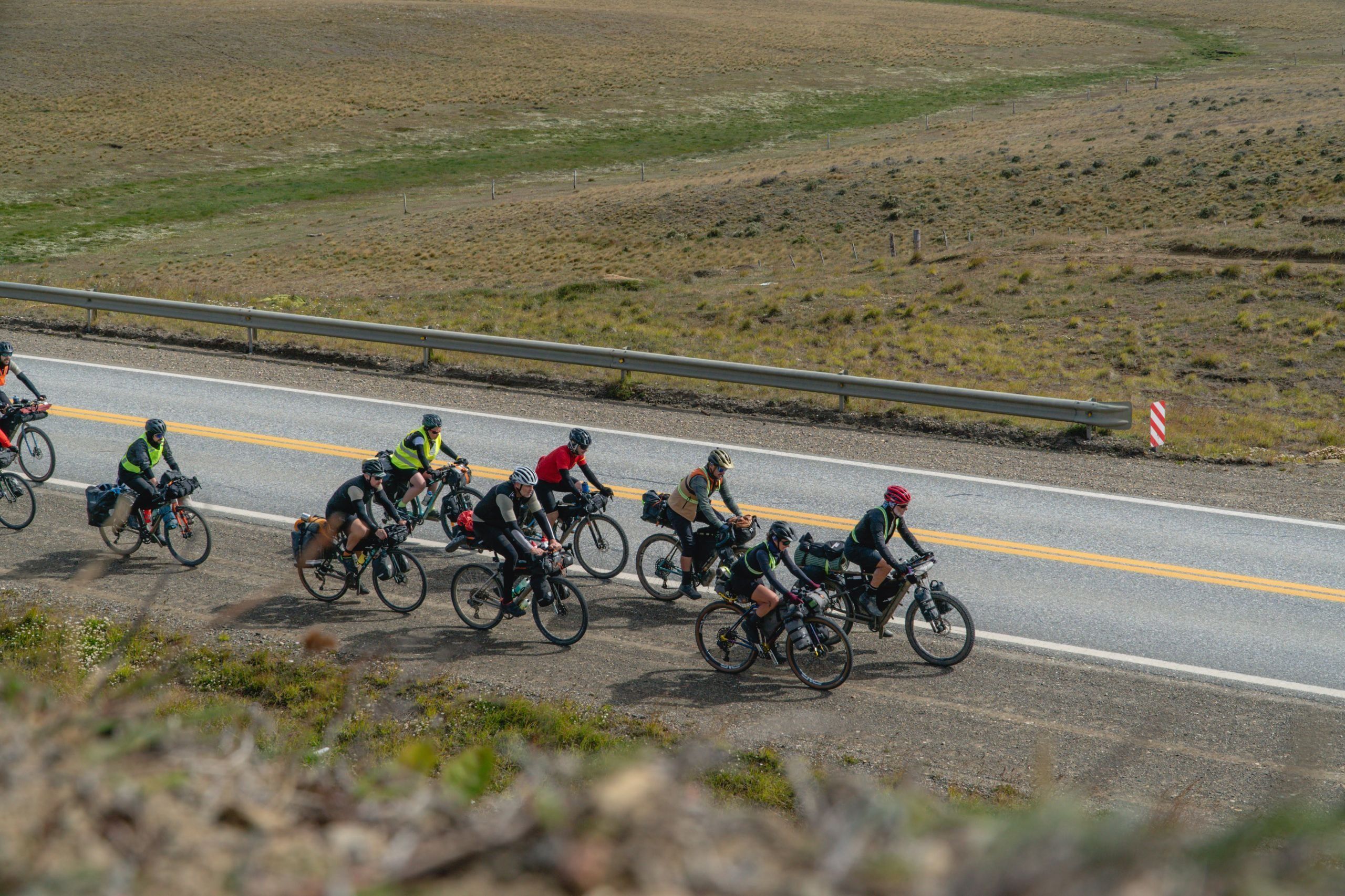
From November to March, the southern summer. December and January have the longest days, which matters when the wind slows you down. Even in summer it can be cold and wet, and snow is possible on the passes. We ride in January, plus a New Year’s Eve departure that starts on 26 December.
The wind
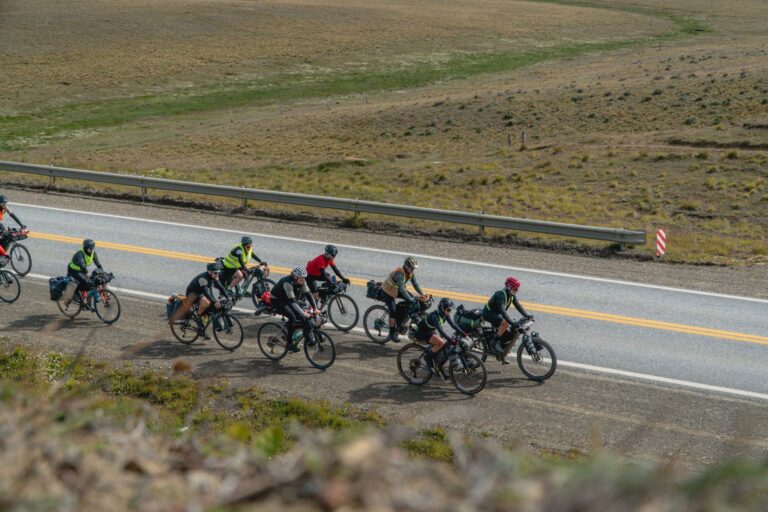
The Patagonian wind is the thing every rider remembers. It blows mostly from the west, often for days, and gusts can push you off the road or stop you on a climb. Plan shorter days than the distance suggests, ride early when the wind is often calmer, and stay flexible: on our trip a stage to Grey Lake is short on paper and hard in practice because of the wind.
Food, water and resupply
Towns can be a day or more apart, especially on the pampas and in Tierra del Fuego. Carry food for at least a day or two and water for long, dry stretches; refill at estancias, camps and roadside shelters when you can. In Tolhuin, the bakery is a famous stop for every cycle traveller.
Crossing between Argentina and Chile
Most Patagonian routes cross the border more than once. Chile has strict biosecurity rules: you must declare, and usually leave behind, fresh fruit, vegetables, meat, dairy and other animal or plant products. Eat them before the border, carry your passport where you can reach it, and expect a stop of an hour or more at busy crossings.
Every entry into Chile, including overland crossings, needs a new declaration. Check the current rules on the official SAG page.
Where do you sleep?
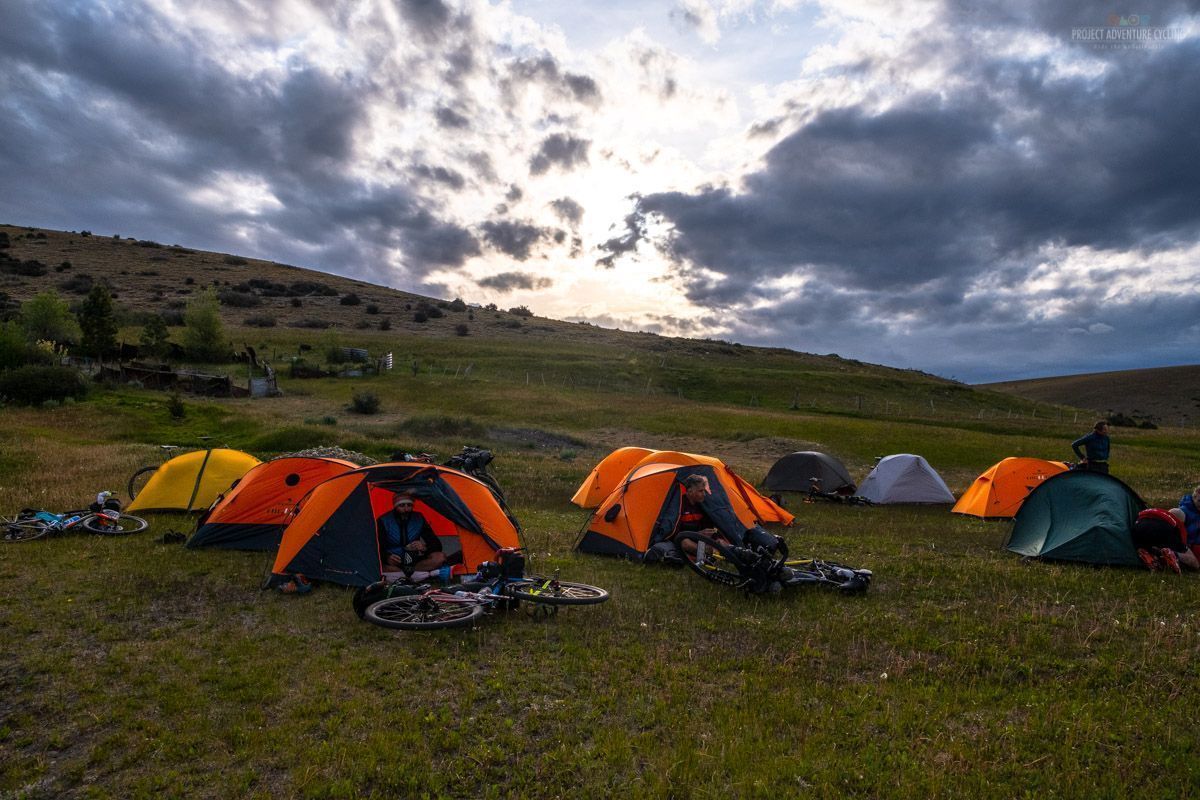
In a mix of campsites, wild camps, hostels and small hotels. National park campsites such as those in Torres del Paine need booking in high season. On our trip we sleep in tents, hostels and hotels, and dinner is included on most stage nights.
Bike and gear
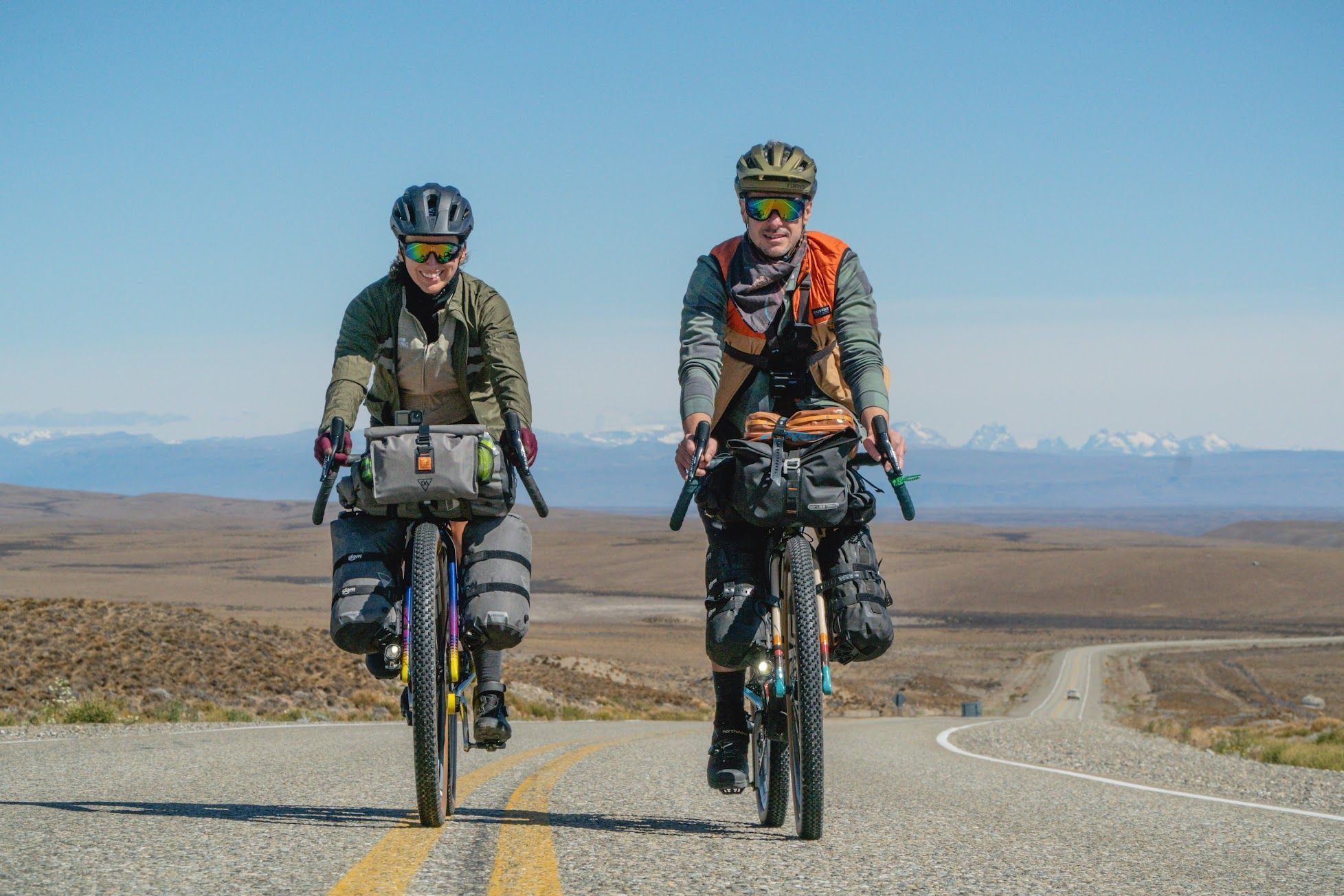
- Bike: a gravel or mountain bike with tyres wide enough for corrugated gravel (we suggest 2 inches or more), set up for bikepacking.
- Clothing: waterproof jacket and trousers, warm layers, gloves and a buff: summer days can feel like winter in the wind.
- Camping: a tent that stands up to strong wind, a warm sleeping bag and a stove.
- Spares: tubes or tubeless repair kit, brake pads, chain and the tools to fit them. Bike shops are rare between towns.
New Year’s Eve in Patagonia
Spending New Year on the road is one of the most special ways to see Patagonia. Our New Year’s Eve departure starts on 26 December, rides the same route from El Calafate to Ushuaia and spends 31 December on the road, with the group.
Ride Patagonia with us
Twelve stages and about 1,000 km from El Calafate to Ushuaia, with PA Cycling guides. Several departures every January and one over New Year.
Guided or on your own?
Many riders bikepack Patagonia independently, and it is a wonderful trip if you have the time and experience. A guided bikepacking trip makes sense if this is your first big expedition, if you have only two or three weeks, or if you want guides who know the camps, the border crossings and how to read the wind, and a group to share it with.
Questions about bikepacking in Patagonia
How hard is bikepacking in Patagonia?
Hard, mostly because of the wind, the weather and the distances, not the climbing. Our route has twelve stages of 50 to 127 km and about 10,000 m of climbing in total.
Do you guide the Carretera Austral?
Not at the moment. Our Patagonia route goes from El Calafate to Ushuaia, through Torres del Paine and Tierra del Fuego.
Can I bikepack Patagonia as a beginner?
With good fitness and a guided group, yes: several of our riders did it as their first bikepacking trip. On your own, gain some experience with loaded touring and camping first.
Which month is best?
January, for long days and the most stable weather of the summer, though Patagonia is never fully predictable.
More questions? Read our general FAQ, write to info@pa-cycling.cc or message us on WhatsApp.