
7 – 22 May 2027
The road that was already there
Crossing Japan by bicycle along a four-hundred-year-old road, in the season when everything begins again
Two souls. One vision. One road.
Some journeys are not made to see new places, but to stop crossing them distractedly. This one comes from the meeting of Willy Mulonia, who knows roads with his soul and legs, and Andrea Bariselli, who studies them with his mind. On one side the effort, the navigation, the logistics of an expedition. On the other, neuroscience and the work on attention. Together we imagined journeys in which body and mind work on the same material.
The Nakasendo
Between Kyoto and Tokyo there is a road four centuries old.
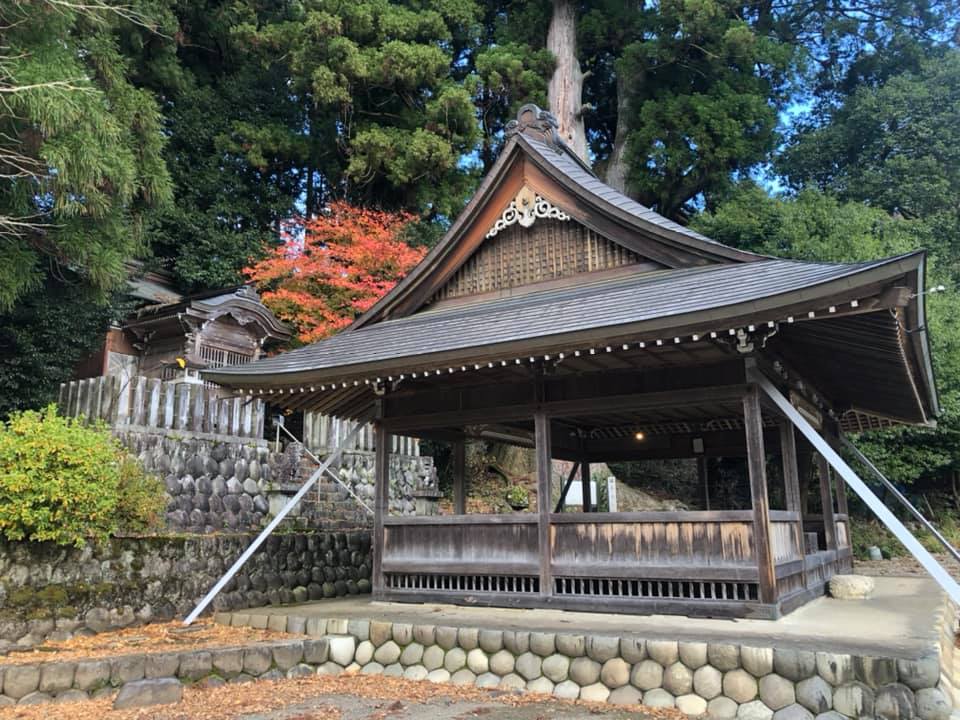
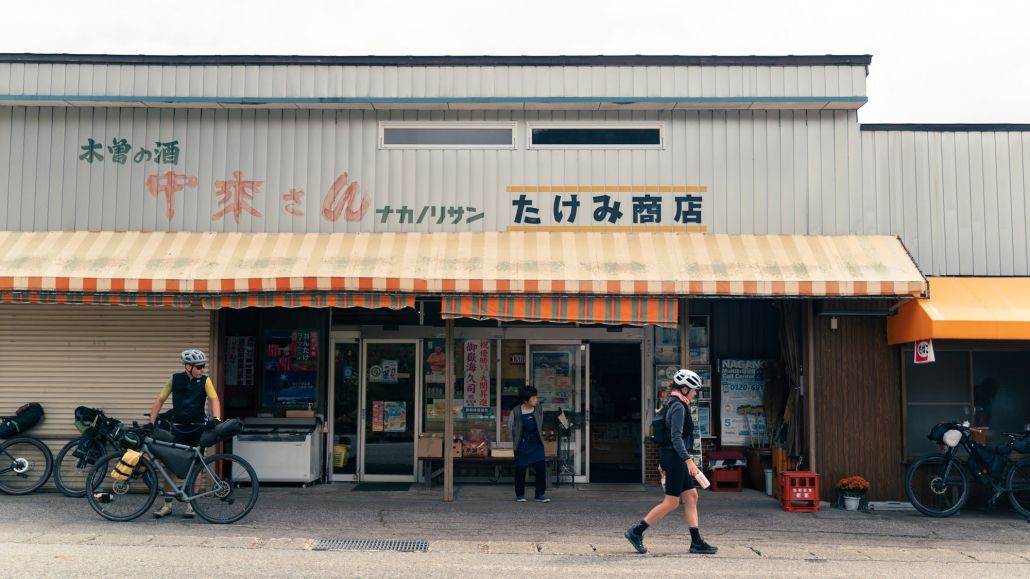
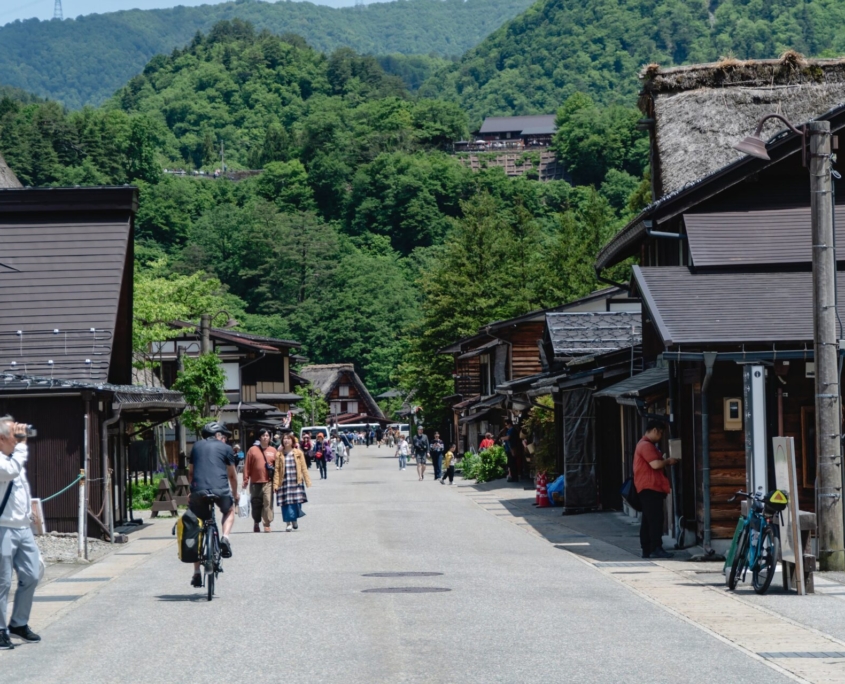
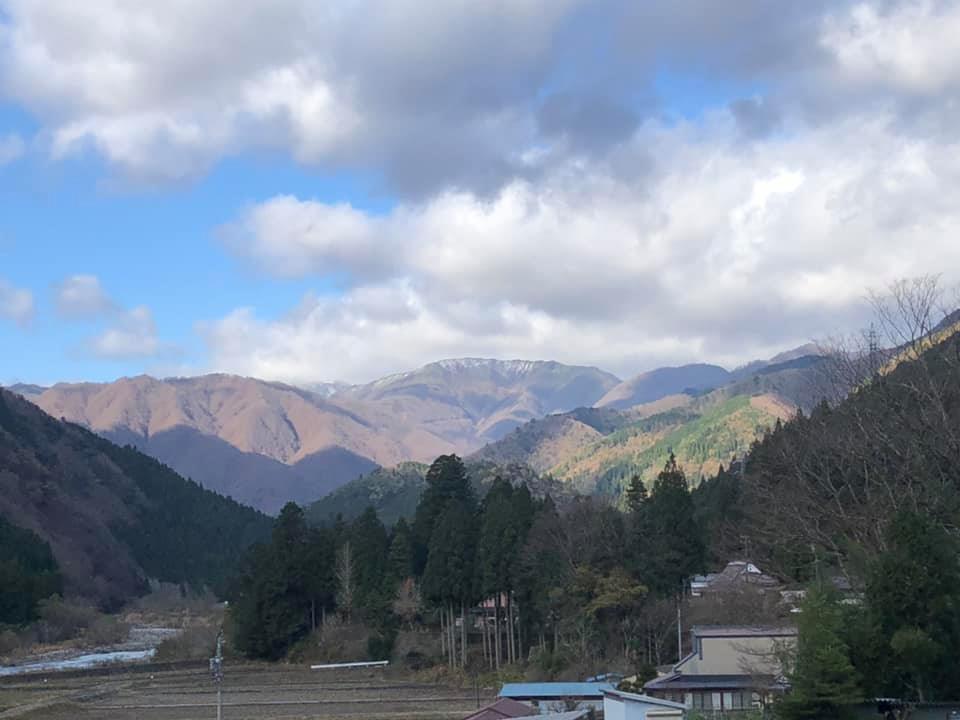
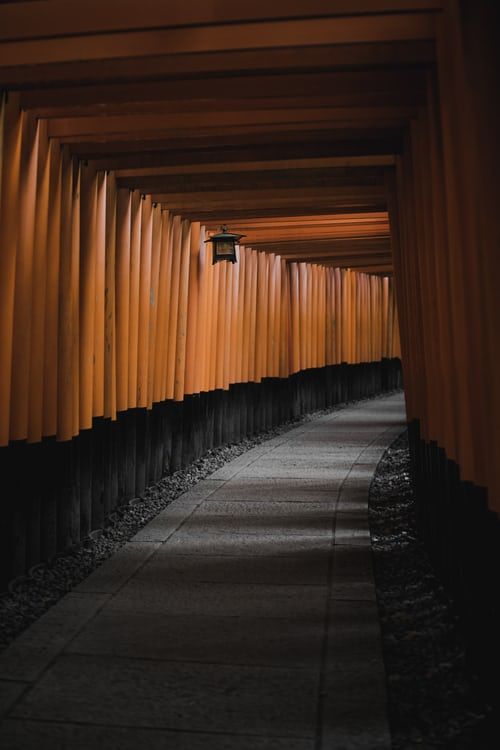
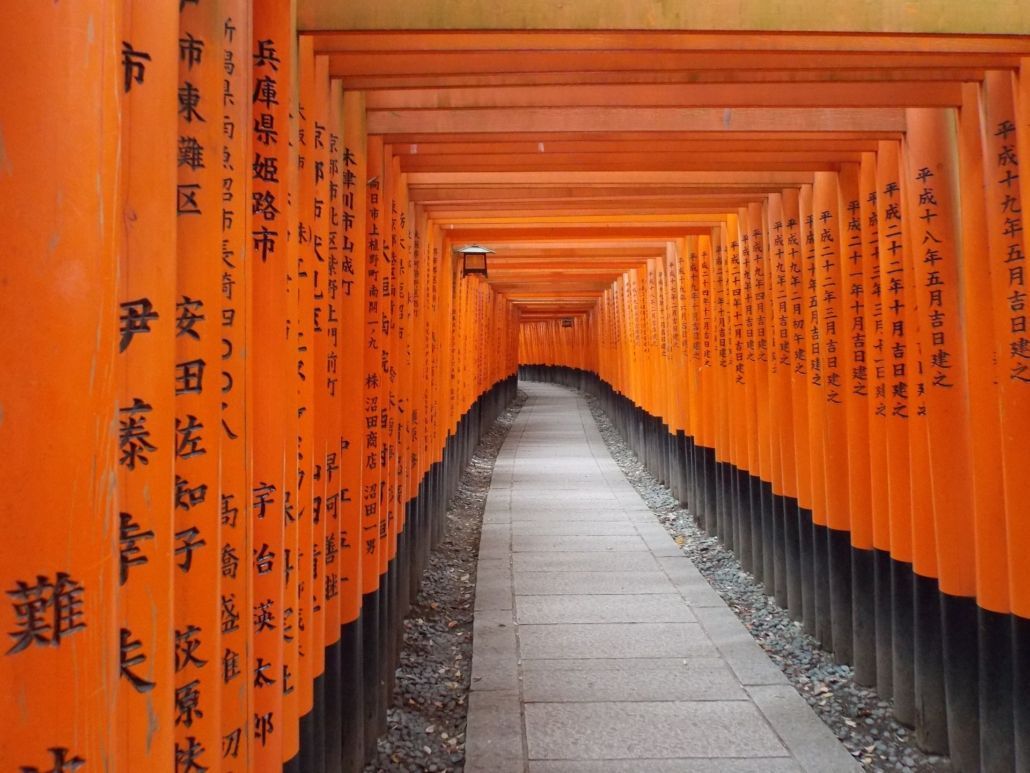
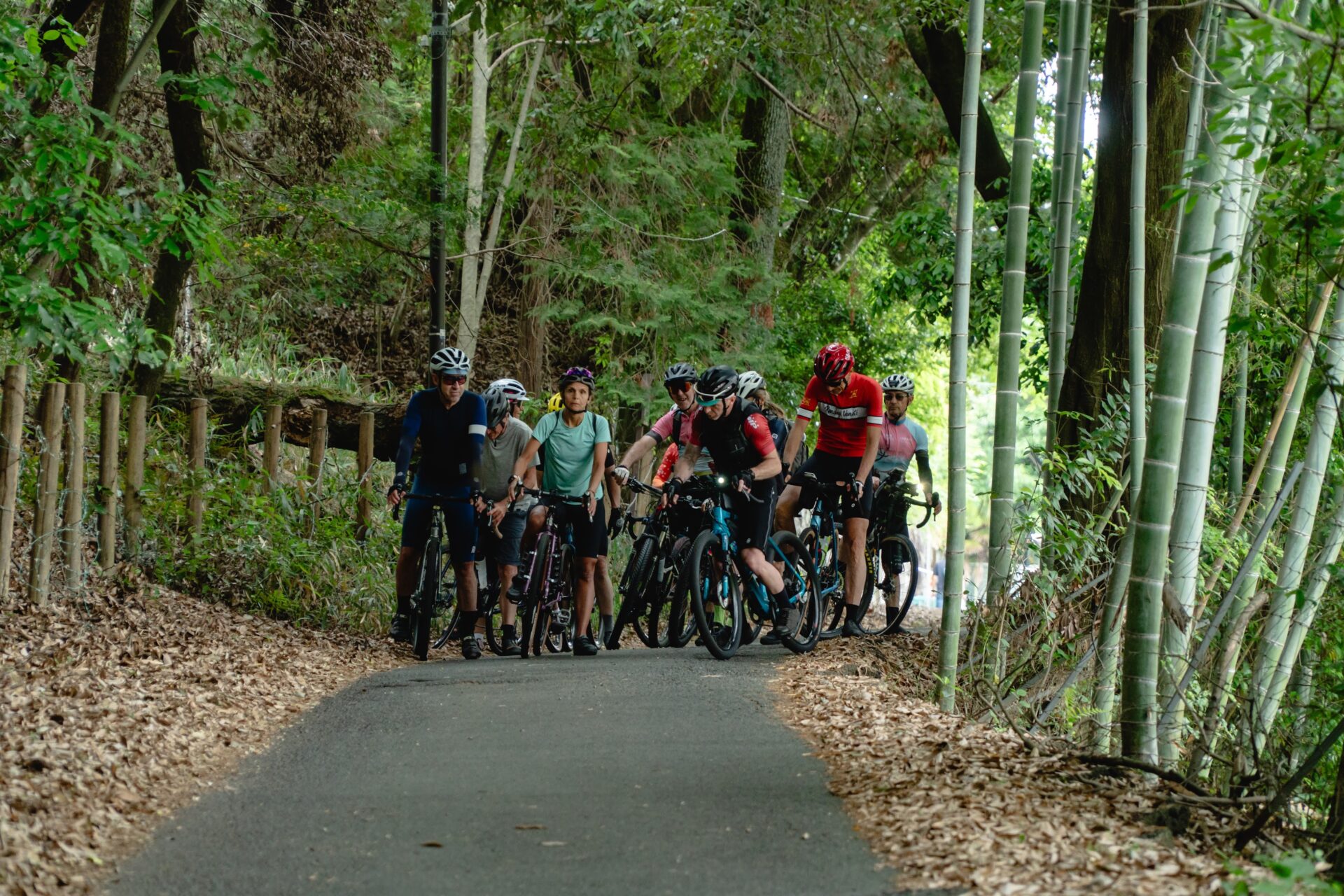
It is called the Nakasendo, the route through the central mountains. In the Edo period it was one of the country’s five great highways: sixty-nine post stations between the imperial capital and the seat of power. Merchants walked it, and pilgrims, monks, feudal lords with their processions. We will meet it on the second stage and find it again crossing the Kiso valley.
In the Atacama there was nothing to see and we learned to subtract. In Mongolia there was no track, and we made the track ourselves. In Morocco everything was a doorway. Here the road already exists, walked by millions of feet before ours. We are not explorers: we are the last in a very long line.
And the question changes. It is no longer what we will discover. It is what we add to something that was already there.
May
We go in May, and that is not a detail.
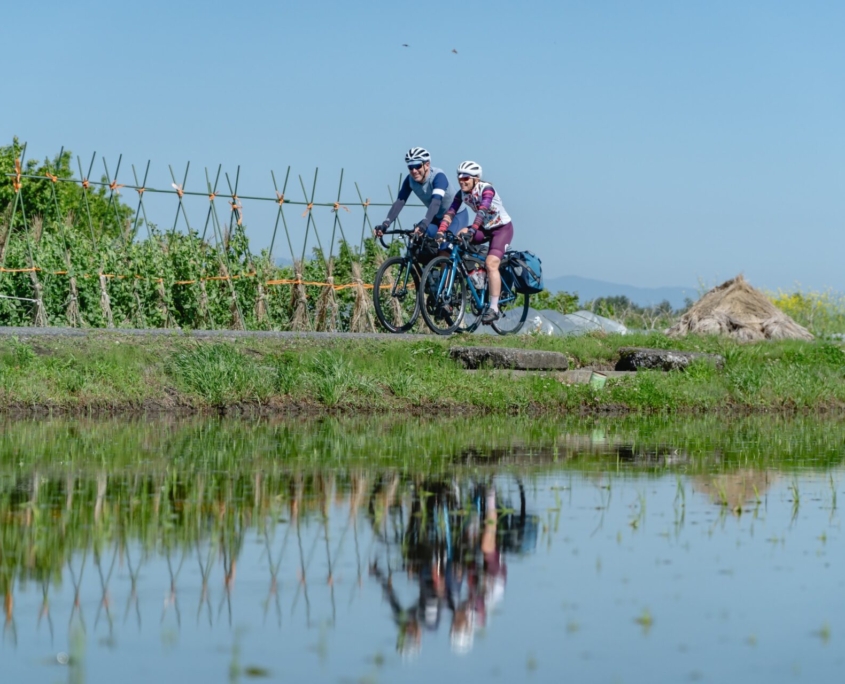
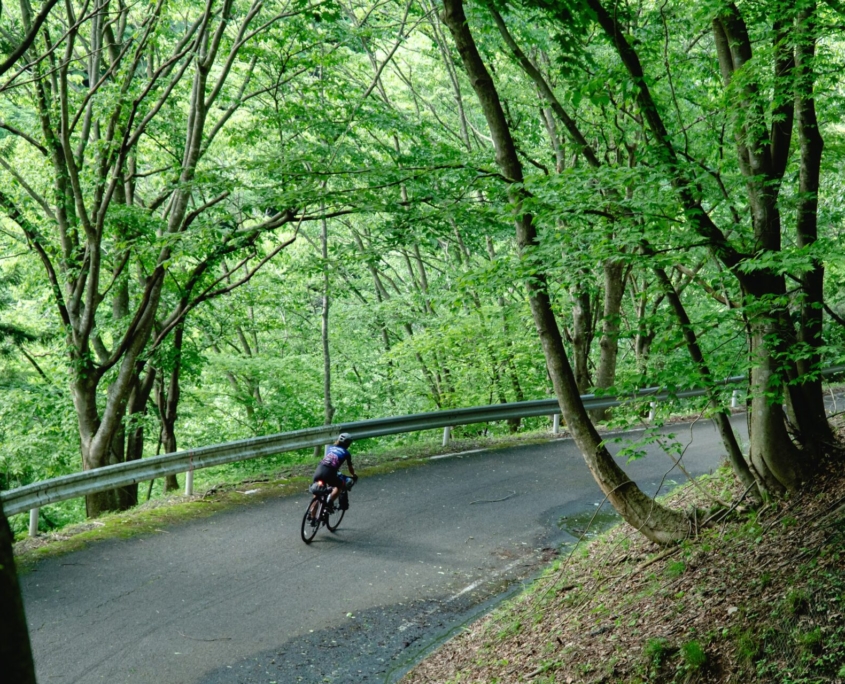
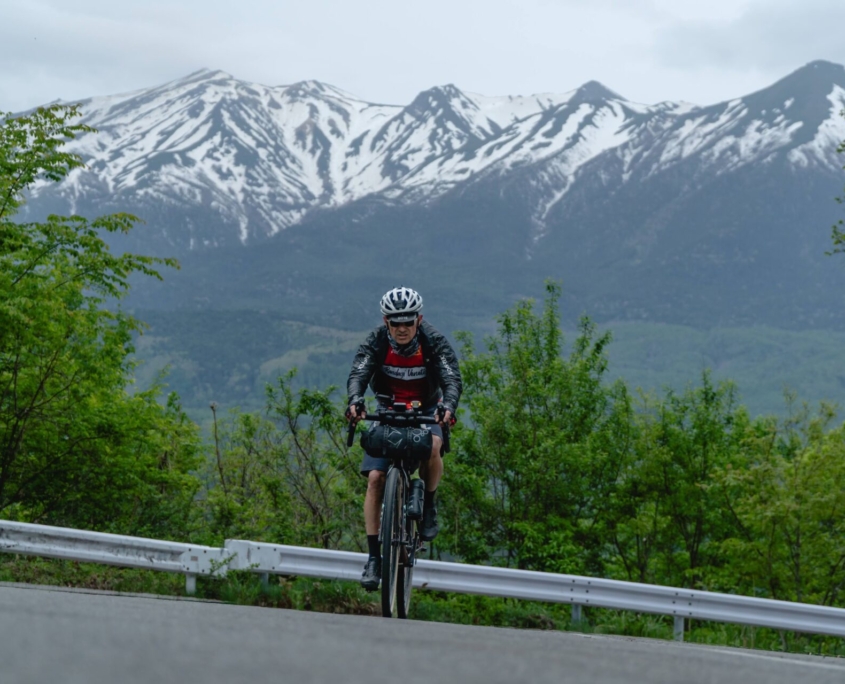
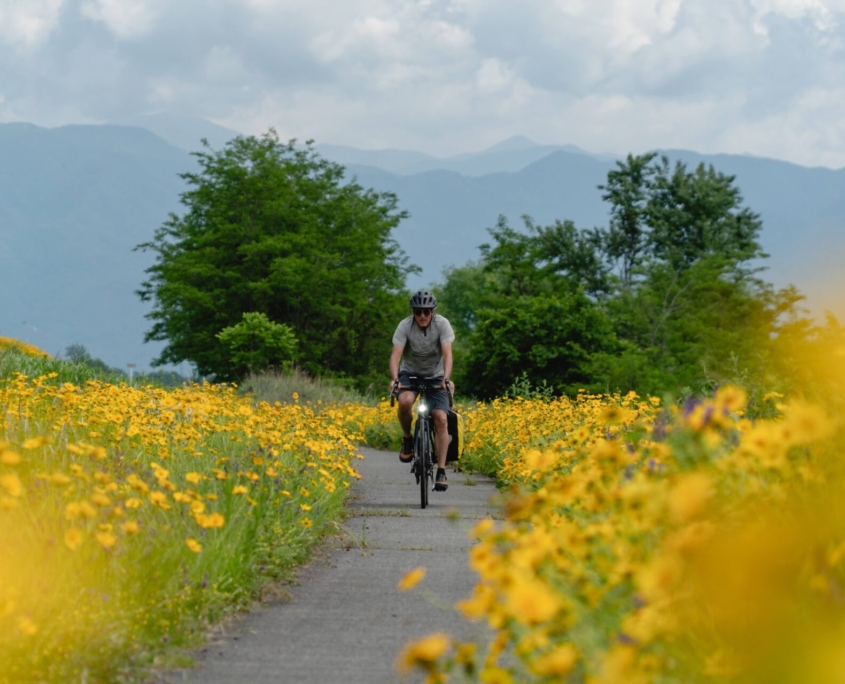
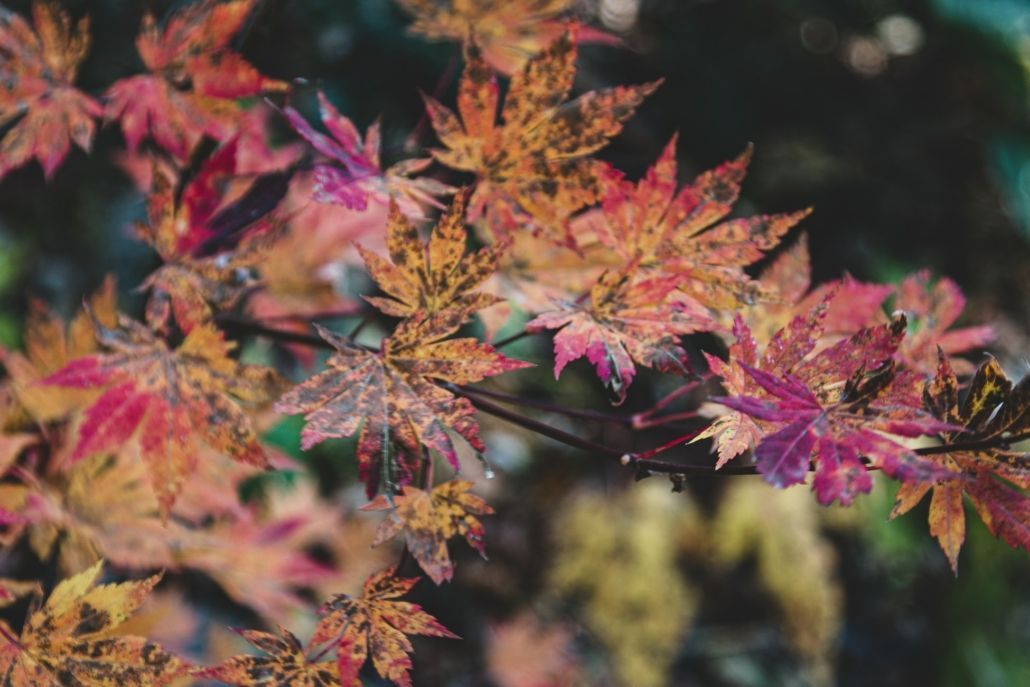
By mid-May the cherry blossoms have been gone for six weeks. What we will find is something less photographed and more violent: the Japanese call it shinryoku, new green, the acid green of leaves two weeks old. On the passes above a thousand metres there will still be snow. In the valleys it will be rice-planting season, and for a few weeks the countryside of Gifu and Nagano becomes a mosaic of flooded paddies reflecting the sky, with people bent over inside them, planting by hand what they will eat in autumn.
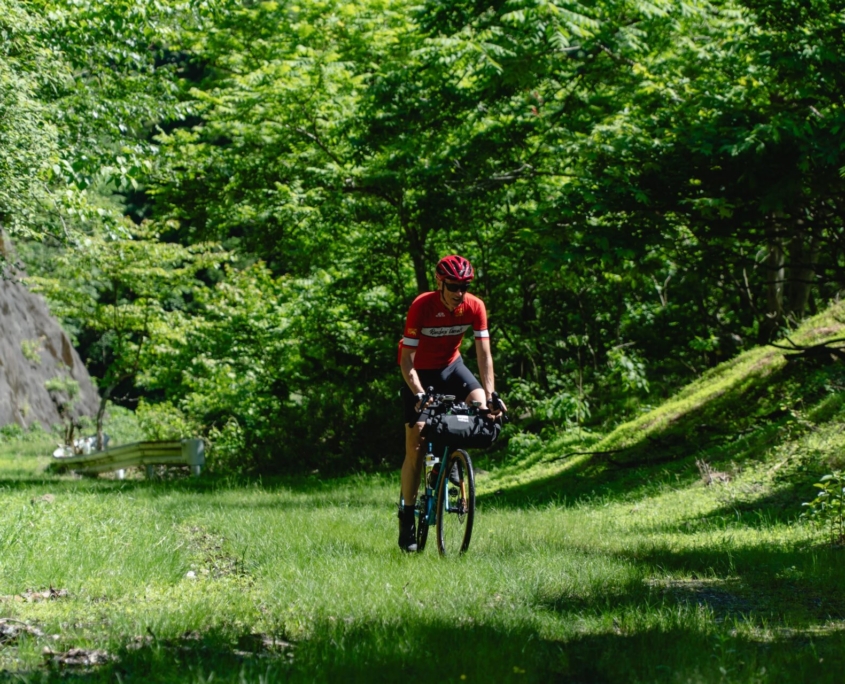
The road is four hundred years old. The leaves are two weeks old. We will ride through this for ten days.
Fuji
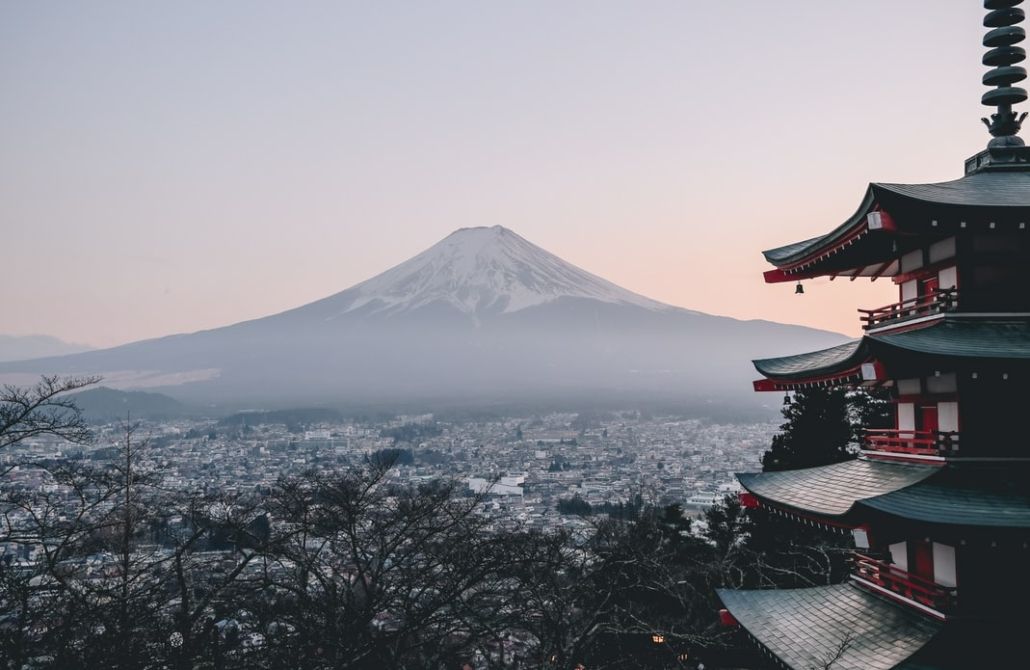
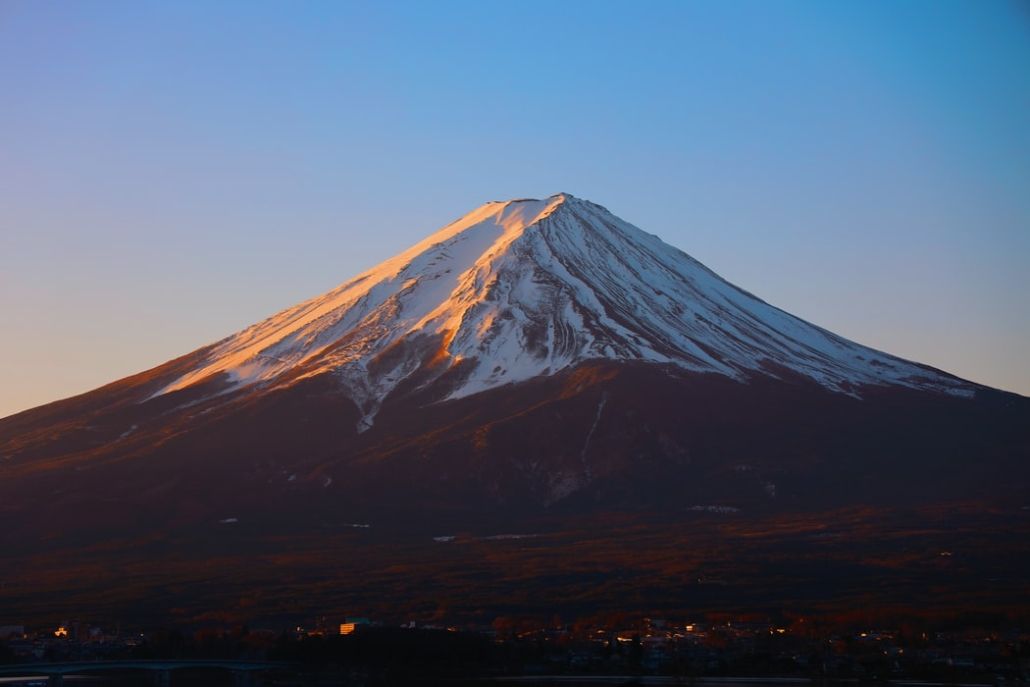
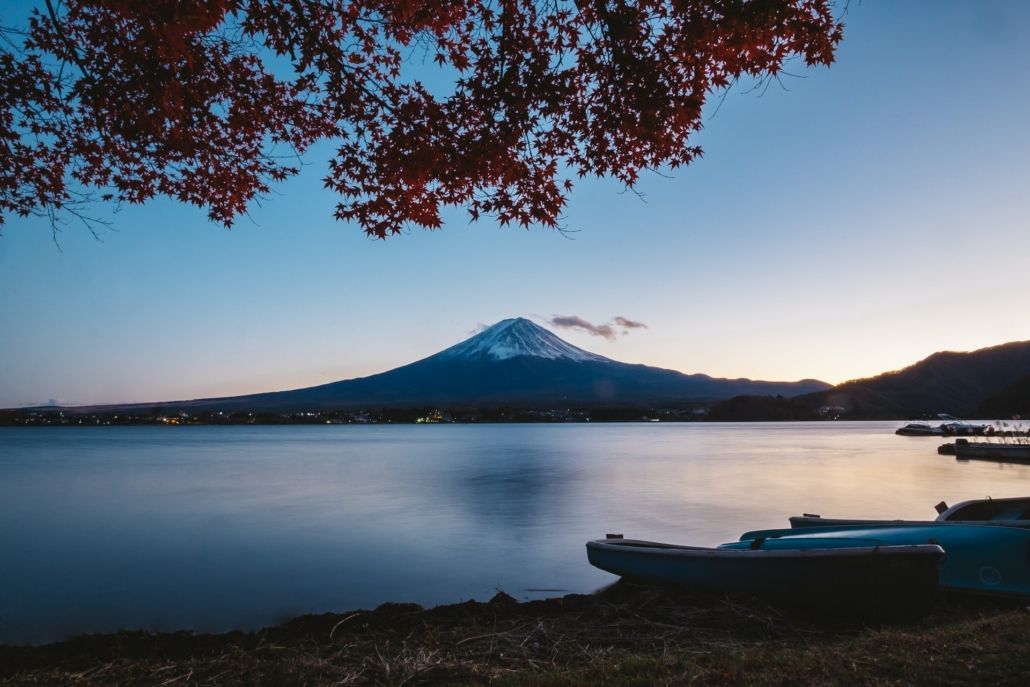
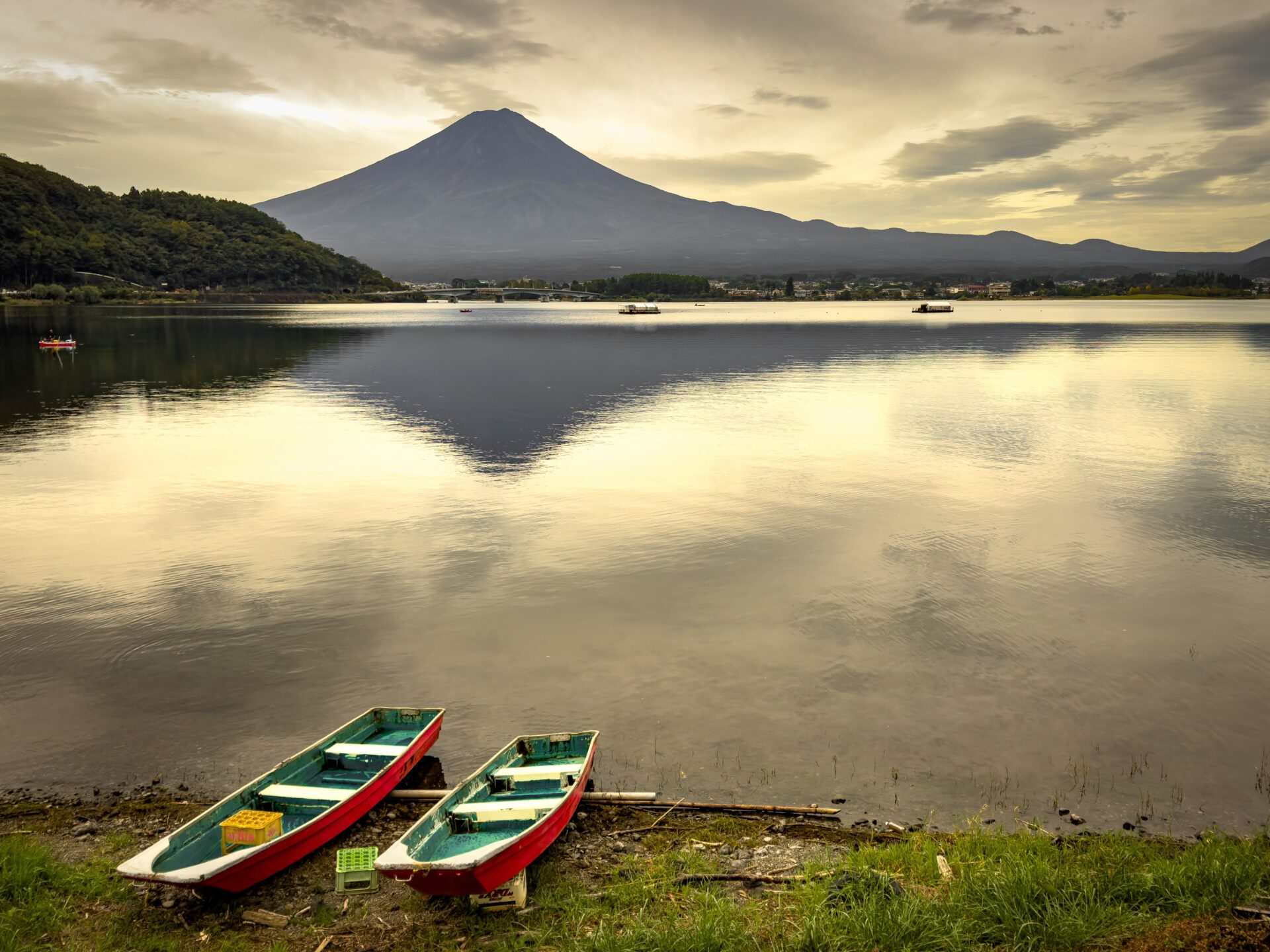
Towards the end, on an ordinary stage, Mount Fuji will appear.
We have seen it ten thousand times already. Hokusai made thirty-six views of it, then a hundred more, and it has been perhaps the most photographed mountain in history ever since. Faced with something it recognises, the brain does something odd: it stops looking. The predictions already in memory are enough, and attention switches off. It is the same mechanism that lets us cross our own city without seeing it. Arriving there by bicycle after nine days of effort may be the only way we have of outwitting it.
Where it ends
The bikes stop at Kawasaki, on the edge of Tokyo. You do not ride into the centre, and that is not a compromise: the Nakasendo also stopped at the edge, and the last of its sixty-nine stations stood outside Edo. You entered on foot, the next day.
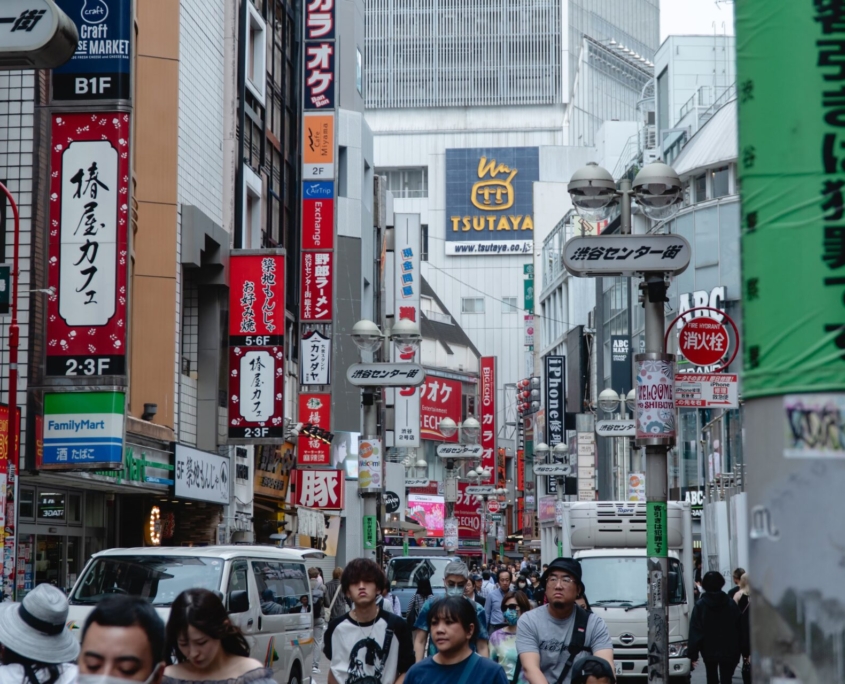
Not a desert, not a steppe, not an earthen ksar: the largest urban area on the planet. In every other journey the city was the fall, the return to life as it was. Here the city is the destination, as it was for those who walked this road four centuries ago. This journey will not ask us to hate the place we come from. It will ask something harder: to go back there different.
The rhythm of the day
Rewild Your Mind does not add activities to the journey. It changes the way we cross it. Each day moves in three movements.
The seed. Before getting on the bike, a short text. Not an assignment, and it asks for no answer: it is something to think about while riding. In ten hours in the saddle, a thought has time to do its own work.
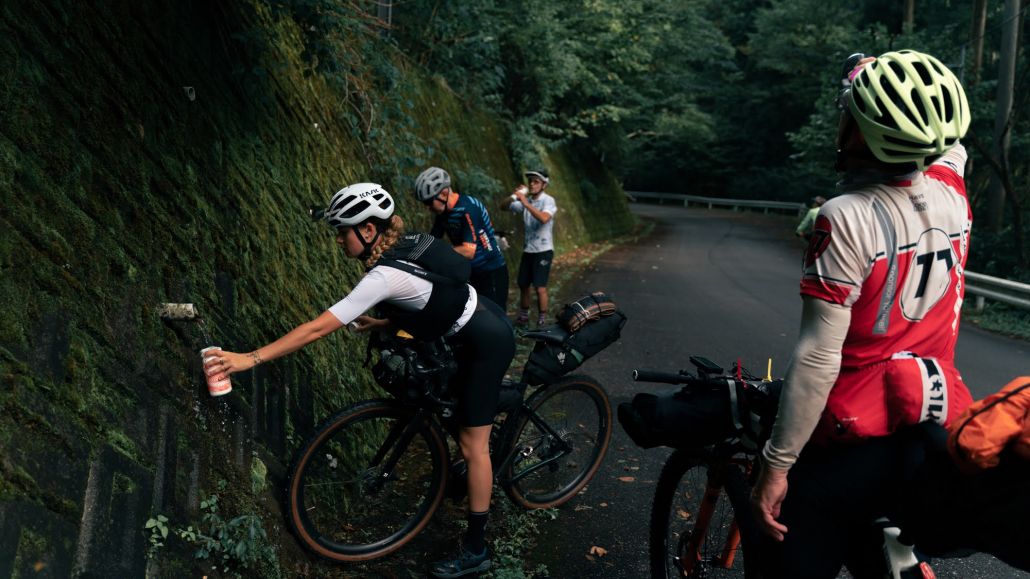
The crossing. The day itself. Nobody asks anything of anyone. We ride, and the body does the work.
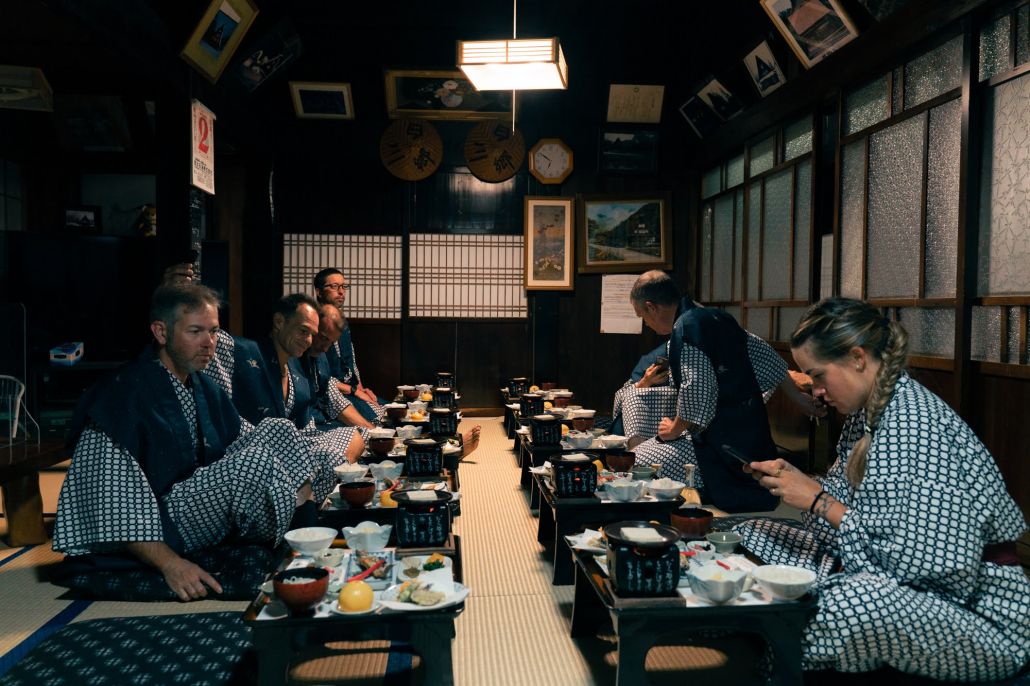
The integration. After dinner we sit in a circle for about forty-five minutes. People speak in turn, nobody interrupts, nobody comments on what someone else has said. Anyone who does not feel like speaking passes, and passing counts as much as speaking. This is not therapy and it is not a sharing group: it is a space with precise rules, and the rules are what make it safe.
At the start each participant receives a leather notebook, empty. Then, every day, a card: the morning text, the evening question, a reading. The cards are pasted inside, and next to them goes whatever turns up — a ticket, a stamp collected along the road, a photograph. By the end of the journey no two notebooks look alike, and it is the only thing anyone takes home besides tired legs. What is written there belongs to whoever writes it: nobody reads it and nobody asks.
All that is needed is a pen you like.
What we will experience
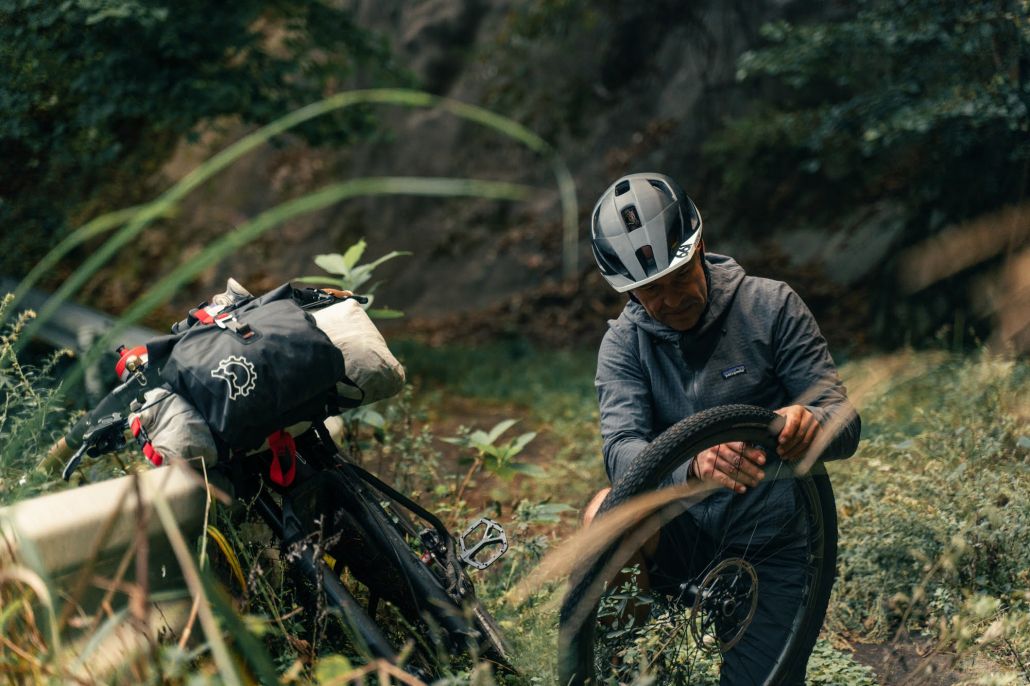
Ten stages from Kyoto to Kawasaki, over nine hundred kilometres and almost eleven thousand metres of climbing through Kyoto, Shiga, Gifu, Nagano, Yamanashi and Kanagawa. A group of eight.
A rest day in Takayama, halfway, before the two hardest stages. Nights in authentic ryokan, with hot baths and dinner served on the floor, and nights in mountain hotels.
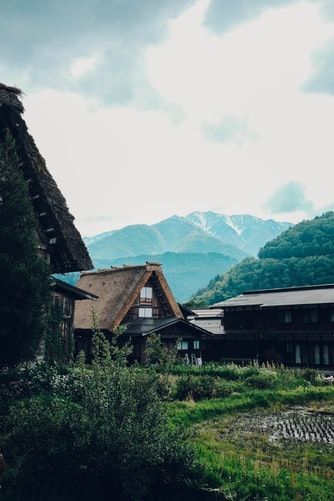
The thatched roofs of Shirakawago, which the village re-thatches collectively every thirty years.
The field of Sekigahara, where on a single day in 1600 it was decided who would govern Japan for two and a half centuries, and over which we will ride.
The evenings in a circle, which are the part of the journey no photograph manages to bring home.
An invitation
This journey is hard, and the inner work takes nothing away from the physical side: it is added to it.
It is for those who want to cross Japan with their body instead of watching it through a window. For those who find evenings in a group more interesting than awkward. For those who accept that a journey can change something without promising in advance what.
It is not a cultural tour with a bike as transport, and it is not a clinical support programme.
In mid-May 1689 a man left his house and set out north on foot. His name was Matsuo Bashō, and from that journey came Oku no Hosomichi. He wrote that the months and days are travellers of eternity, and that the passing years are travellers too.
We will ride through, three hundred and thirty-eight years later, in the same week of the year.
The road, meanwhile, has stayed where it was.
The meaning of REWILD YOUR MIND
To Rewild Your Mind means to return to the natural, the untamed, the essential.
During the journey we will work on the connection between mind, body, and environment through the Thalea Method, led by Andrea Bariselli, including:
• presence practices
• daily journaling
• sensory observation
• moments of silence and shared reflection
A path that uses movement as a doorway into awareness, turning each stage into a fragment of one’s inner journey.
An authentic expedition
As always, the experience will be led by Willy Mulonia, with his vision of travel as encounter, simplicity, and respect for places and people.
By his side, Andrea Bariselli, explorer of inner deserts, will bring the psychological and contemplative dimension that made the Japan experience truly unique.
The result is a journey that is not just crossing — it is transformation.
Trip details
7-22 May 2027
Max 8 participants
Supported expedition
Van support
🏕 Nights in hotels and ryokan accomodations
Thalea Method: neuroscience, mindfulness, journaling
Professional guidance by Willy Mulonia & Andrea Bariselli
What to expect
• effort as a teacher
• immensity as reflection
• silence as a space of knowing
• a small group becoming a community
An experience where adventure, introspection, and untamed nature converge.
Cancellation policy
Refund and cancellation
Where, for whatever reason, one person is obliged to withdraw, the person must give written notice to Project Adventure Cycling.
Refund will be calculated with this penalty:
– In case of cancellation, an administrative fee of €300 will be charged.
– 30% of the total trip cost for cancellations up to 45 days before departure
– 40% of the total trip cost up to 30 days before departure
– 50% of the total trip cost up to 21 days before departure
– 75% of the total trip cost up to 14 days before departure
– After this date no refund will be given.
There will be no refunds for those who do not show up at the start of the trip or withdraw during the course of the tour.
There will be no refunds for those who are unable to start or complete the tour due to a lack or inaccuracy of personal travel documents (i.e Visa or Passport).
The traveller understands that some destinations pose more of a risk than other destinations due to weather conditions, socio-political situations and the geography of the region. The traveller acknowledges that factors such as, but not limited to, weather conditions, landslides, floods, flight cancellations or delays, strikes, labour issues, power failures, restrictive governmental laws or regulations, riots, insurrection, war or other (hereinafter called “Force Majeure Event”) are not the fault of Project Adventure Cycling and may hinder, delay or even prevent the Traveller’s ability to make or complete the trip. The traveller acknowledges that the Project Adventure Cycling shall not be liable to the traveller for any delay or cancellation of the trip due to a Force Majeure Event. The traveler is neither entitled to a refund nor any other payment for damages from the Project Adventure Cycling in the event that the trip is cancelled or delayed due to a Force Majeure Event. Please note that we are never responsible for any airfare ticket expenses.
Included + Not Included
The price includes
— Bike guides from PA-Cycling (specific number of guides depends on the number of participants)
— ALL OVERNIGHTS in Hotels, Ryokan and small guest houses
— Dinner and breakfast during all stages included
— Group travel insurance
— Shipment of bike cases from Kyoto to Tokyo
— Support van and luggage transport (50 l max) for each participant
— Welcome and Bye Bye dinner
— Transfer from Kansai airport to our Hotel in Kyoto by train (If arrival on the scheduled day)
— Airport transfer on departure day from Tokyo (if departure on the scheduled day)
– If departure is from Haneda airport the transfer will be by Bus hotel shuttle (5 min to airport)
– If departure is from Narita airport the transfer will be by bus hotel shuttle to Haneda, and from Haneda, with a bus (highway bus – 1:15hr). This bus has a cost of ¥2100 – ¥2900
— Andrea Bariselli as Thalea Method Founder for the full duration; leather travel notebook and daily Rewild cards; daily morning text and evening circle.
— Kyoto / Kawasaki — single room included, no supplement.
— Ryokan nights — Japanese-style futon rooms; rooms may be shared with other or even more
guests.
- Dates7 - 22 May 2027
- Duration16 days
- Stages10
- Length912 km
- Elevation10870 m
- DifficultyHard
- Price8200 €